AlfaVeta Pet dental care in Oxie
Pet dental care in Malmö, cleaning, periodontal treatment, and preventive procedures for animals. We help you with everything related to oral health.
How can we help you today?

Dental issues in dogs – periodontitis
If your dog is over three years old, it’s likely suffering from periodontitis, a common health issue in veterinary medicine. Studies show that 80–90% of dogs over three years old exhibit some signs of periodontitis, even if their teeth appear clean and white. The condition is more prevalent among smaller breeds and increases with age. Unfortunately, periodontitis is often detected only at advanced stages. Early diagnosis can be challenging, as visible symptoms are often absent, and the main cause may not always be evident during a routine visual inspection.
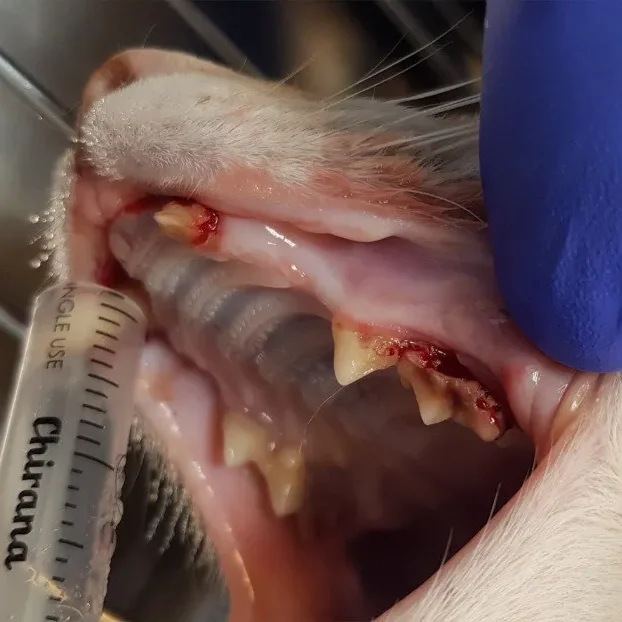
What is the primary cause of dental problems?
The primary cause of dental problems is plaque, particularly the type that forms under the gumline. This should not be confused with the aesthetically unappealing brown tartar that accumulates on teeth over time. While tartar promotes bacterial growth and bad breath, it is not the main cause of periodontitis. The true culprit in the battle against periodontitis and tooth loss is plaque, not tartar. Plaque is an invisible, bacteria-covered biofilm that forms on the surface of teeth, both above and below the gumline. It leads to gum inflammation (gingivitis), creates deep pockets between the tooth and gum (periodontal pockets), and damages the tissues beneath the gum (periodontitis), ultimately resulting in tooth loss and causing significant pain and discomfort.
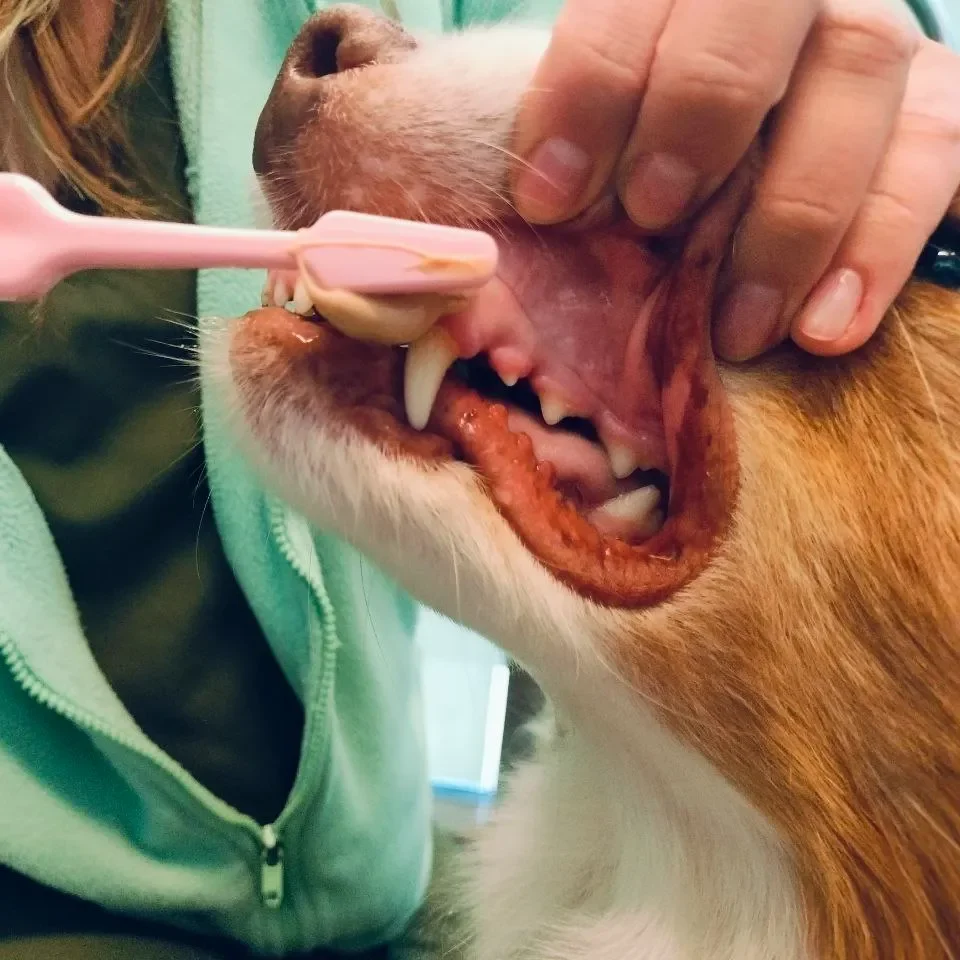
How to prevent dental problems in dogs and cats
Preventing gum issues has a significant impact on your dog’s health, comfort, and lifespan. Preventing periodontitis is crucial for overall health, as it is linked to liver and heart diseases. Additionally, periodontitis is painful, even if your dog does not show obvious signs of pain.
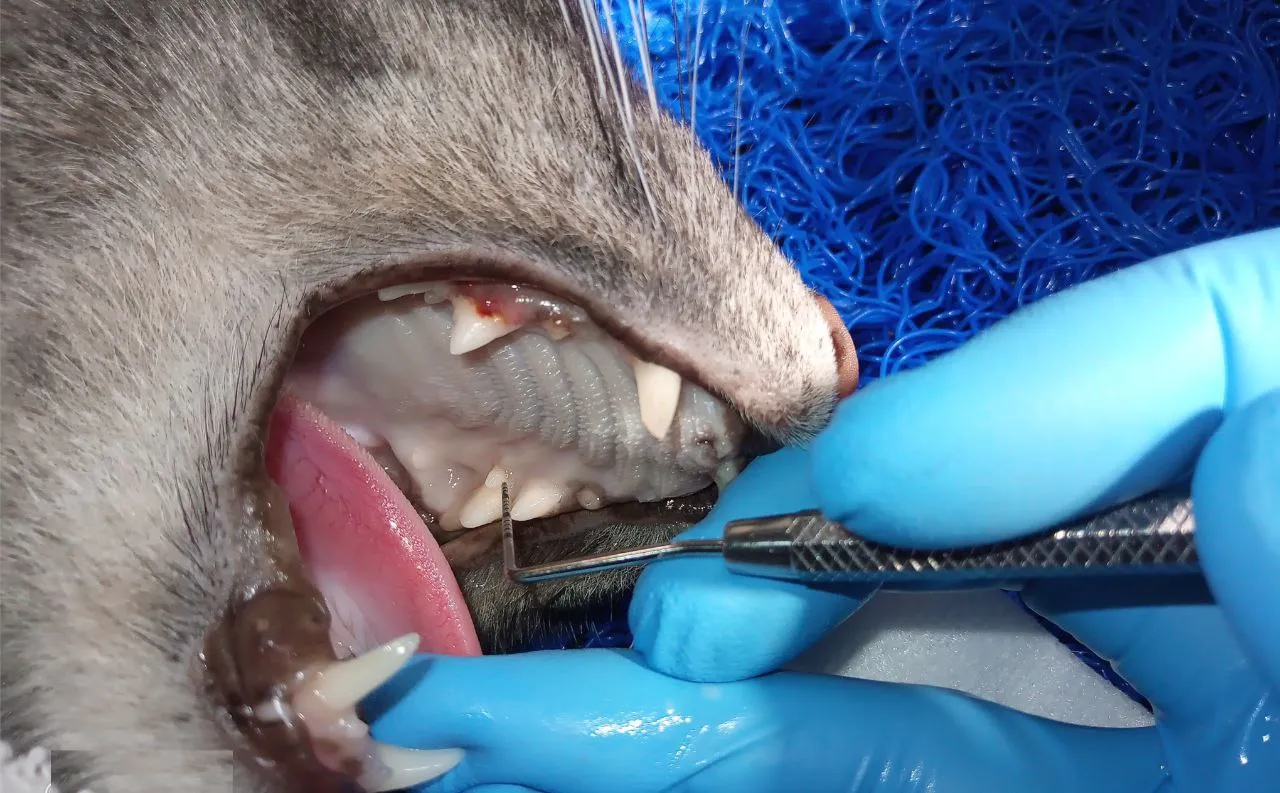
Signs of periodontitis in dogs and cats
The animal scratches or rubs its face, drools, has a reduced appetite, takes longer to eat, exhibits changes in eating habits (such as carrying food from the bowl and dropping it on the floor before eating), has bad breath, bleeds from the mouth, shows reluctance to chew on favorite chew toys, and may display aggressive behavior or withdraw from family life. The best preventive measure against periodontal disease is regular professional teeth cleaning by a veterinarian and daily dental care at home.
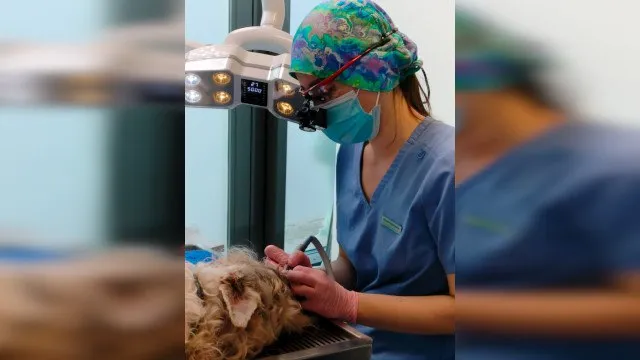
Professional dental cleaning for pets
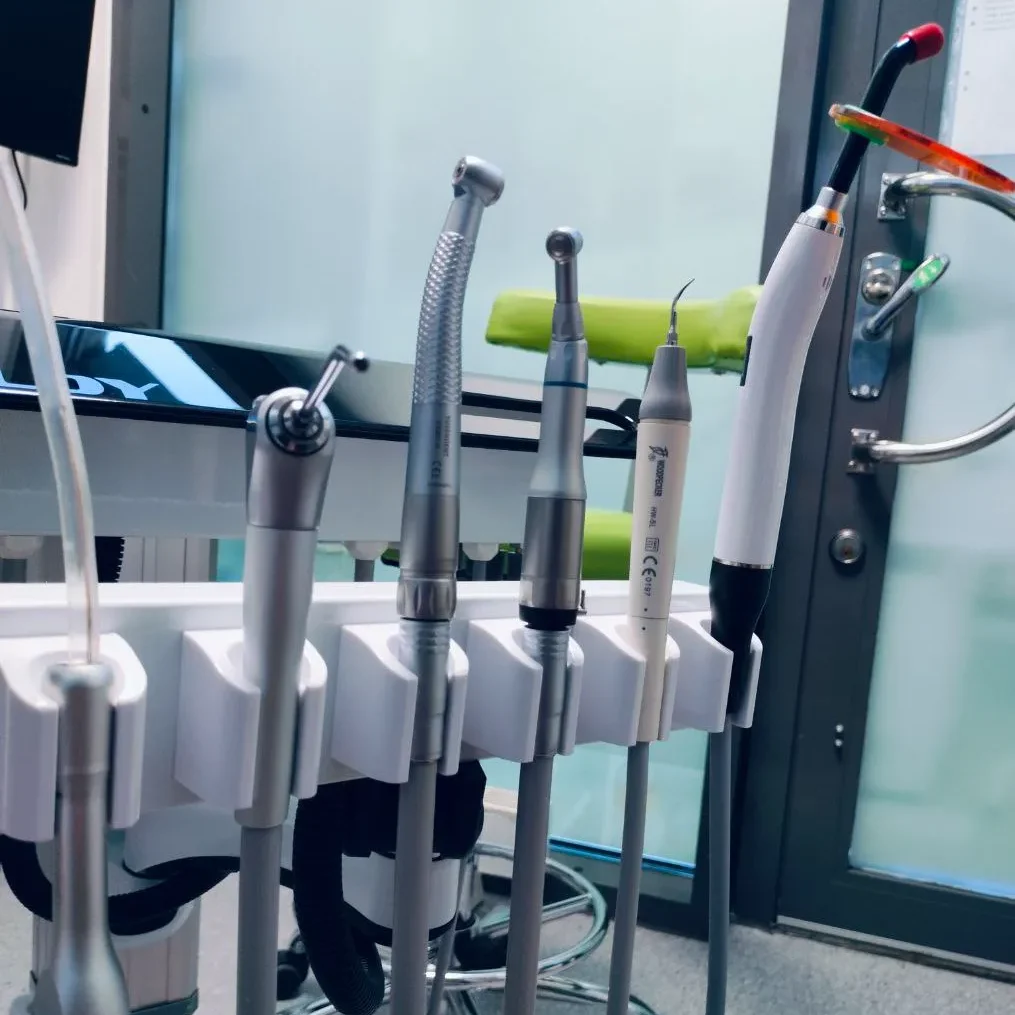
A veterinary dental cleaning involves several steps. We begin with a thorough medical history, a complete physical examination including an oral exam, and pre-anesthesia testing. Our veterinarians will explain the preliminary treatment plan to you. Your dog will then be anesthetized. During the procedure, we take X-rays of each tooth and assess the root status. A probe is used to carefully examine each tooth, and the mouth is rinsed with an antiseptic solution. Visible tartar is removed, and tooth crowns are examined. We check and measure periodontal pockets, clean all tooth surfaces to remove plaque, and perform any necessary surgical procedures (e.g., extraction of diseased teeth). Remaining teeth are polished above and below the gumline. Your dog will wake up from anesthesia under close supervision while we prepare detailed discharge instructions for you. A follow-up visit is often recommended, especially if surgical interventions have been performed.